

How to Contest a Will in Probate Court – Steps and Tips
Ever thought about what happens when a family thinks a will doesn’t show what the deceased wanted? Contesting a will in probate court is a tough legal path. It can reveal family secrets and change who gets what.
A will contest happens when people question a will’s truthfulness. The probate court lets those with the right to challenge a will. They can do this if they think the will was made under fraud, undue influence, or if the person making it wasn’t of sound mind.
Understanding a will dispute is complex. Those who want to challenge a will must know the legal steps. But, winning is rare and can cost a lot of money and emotional stress.
Key Takeaways
- Will contests involve challenging a deceased person’s testament in probate court
- Legal standing is key to starting a will contest
- Winning a challenge is very rare
- Challenging a will can mean big legal costs
- There are many reasons to question a will’s validity
- Each state has its own rules for will contests
- Getting help from a lawyer is very important
Understanding the Basics of Will Contests
Going through the will contest process is complex. It’s a legal journey for those questioning a deceased person’s final wishes. Probate laws guide this path, but it’s not easy.
It’s important to know the basics of will contests. This knowledge helps when you think about challenging a will. The process has key parts that affect its success.
What is a Will Contest?
A will contest is a legal fight over a deceased person’s last will. People who might get something from the will can start this in probate court. They aim to show the will doesn’t really reflect what the deceased wanted.
Reasons for Contesting a Will
There are good reasons to challenge a will:
- Lack of Testamentary Capacity: Questioning the will-maker’s mind at the time of the will
- Undue Influence: Showing someone pushed the deceased too hard
- Fraud or Forgery: Proving the will was fake or changed
- Improper Execution: Saying the will didn’t follow the law
Who can challenge a will matters a lot. To contest, you must have something to gain from the will. This usually means:
- You’re named in the will
- You’d get something under state law
- You were named in a previous will
Will contests are tough. About 80% of those without a lawyer fail. Courts usually stick to the deceased’s wishes unless shown strong evidence against.
Grounds for Contesting a Will
Inheritance disputes are complex and need clear reasons to win. Knowing why you can challenge a will is key.
Not every disagreement with a will is legal. The law has specific reasons to challenge a will:
- Lack of Testamentary Capacity
- Undue Influence
- Fraud or Coercion
- Improper Execution
Lack of Testamentary Capacity
Challenging a will for lack of capacity means showing the testator was mentally incapable. They must not have understood:
- Their property
- Who should get their estate
- The legal meaning of a will
Undue Influence
Undue influence happens when someone forces the testator to make a will against their wishes. Signs include:
- Keeping the testator away from family
- Big changes to the will suddenly
- The beneficiary helped write the will
Fraud or Coercion
Challenging a will for fraud or coercion means showing it was made through:
- False information
- Threats or emotional control
- Faked signatures or documents
Improper Execution
Each state has its own rules for making a will. But common ones include:
| Requirement | Details |
|---|---|
| Age Requirement | Testator must be 18 or older |
| Written Document | Will must be in writing |
| Witness Signatures | Two witnesses must sign the document |
Knowing these reasons is vital for anyone thinking about challenging a will. Getting legal advice is a good first step.
The Probate Court Process
Going through the probate court process can be hard for families. It helps to know the basics of will probate. This way, people can get ready for legal steps ahead.
The probate court is key for making sure a person’s last wishes are followed. It deals with dividing up assets and solving any disputes in managing estates.
Understanding Probate Court Functionality
Probate courts do a few important things:
- They check if a will is real
- They pick an executor to handle the estate
- They solve any disputes over the estate
- They make sure assets are given out right
The Executor’s Critical Role
The executor is very important in the probate process. This person takes care of the estate, pays off debts, and gives out assets to those who are supposed to get them. Their job includes:
- They file the will with the court
- They find and value the estate’s assets
- They tell creditors and pay off debts
- They prepare tax documents
In California, there are rules for the probate process. Estates usually need to be settled within a year. But, this time can change if the case is complex or if there are disputes.
Probate costs can be 4% to 7% of the estate’s value. For smaller estates under $150,000, there might be simpler ways to handle things. This could make the process faster and cheaper.
Preparing to Contest a Will
Challenging a will needs careful planning and strategy. The legal fight can be complex. It demands detailed work and strong evidence.

- Check if you have good reasons to contest the will
- Gather important documents and evidence
- Get advice from a professional lawyer
- Remember, time is very important in will contests
Gathering Evidence
It’s key to collect evidence to show the will might not be valid. Look for:
- Medical records to prove the person could make a will
- Statements from witnesses
- Financial records to show if someone was unfairly influenced
- Records of talks between the person who died and their heirs
Consulting with an Attorney
Finding a good probate lawyer is very important. A skilled lawyer can help you understand your case. They know how to deal with the legal system.
| Evidence Type | Importance | Potential Impact |
|---|---|---|
| Medical Records | Proves mental capacity | High |
| Witness Testimonies | Provides contextual insight | Medium |
| Financial Documentation | Reveals possible manipulation | High |
Note: In California, you have 120 days to contest a will after it’s probated. Acting quickly is key to protect your inheritance rights.
Filing a Contest in Probate Court
Going through the complex world of contested wills needs a smart plan. Knowing the estate law well can help you challenge a will’s validity.
Necessary Documents for Filing
To contest a will, you must gather important papers:
- Original will document
- Death certificate of the deceased
- Detailed petition explaining why you’re contesting
- Supporting evidence showing why someone was left out
- Personal ID and proof of your relationship
Critical Filing Deadlines
Time is very important in will contests. Most places have strict rules for when you can file:
- Usually six months after the will is admitted to probate
- Deadlines can change based on where you are
- Missing these deadlines can stop you from contesting
Understanding Court Fees and Costs
Challenging a will costs a lot of money. Legal fees can be from $10,000 to $50,000, based on how complex the case is. You should be ready for:
- Court filing fees
- Costs for talking to an attorney
- Expenses for expert witnesses
- More costs if the case goes to trial
About 70% of will contests are settled without going to court. Being well-prepared and knowing estate law can help you win your case.
The Importance of Legal Representation
Going through a will contest is very complex. You need a lawyer’s help to challenge a will. They can really help with inheritance rights disputes.
Understanding the legal side of a will contest is key. The right lawyer can change your case’s outcome.
Choosing the Right Lawyer
Finding the right lawyer is important. Look for:
- Specialized experience in probate litigation
- Proven track record in will contest cases
- Deep understanding of state-specific inheritance laws
- Strong communication and negotiation skills
Benefits of Professional Guidance
Having a lawyer helps a lot in will contests:
| Legal Benefit | Specific Advantage |
|---|---|
| Evidence Compilation | Systematic gathering of critical documentation |
| Legal Strategy | Developing a detailed plan to contest |
| Court Navigation | Help with complex legal steps |
| Emotional Support | Help managing family conflicts |
In New York, getting a lawyer is very important. Statutes require specific standing and timing for will contests. A lawyer is key to successfully challenging a will.
Mediation and Alternative Dispute Resolution
Going through a will contest can be tough and costly. Mediation is a better way than fighting in court. It helps families work together to solve problems.
Mediation is great for fixing will issues without hurting family ties. A neutral person helps everyone find a solution they can agree on.
Understanding Mediation in Will Contests
Mediation has many benefits:
- It’s cheaper than going to court
- It solves problems faster
- It’s private
- It keeps families together
Benefits of Mediation
| Aspect | Mediation | Traditional Litigation |
|---|---|---|
| Cost | 30-50% lower | Higher legal expenses |
| Duration | 2-4 hours | Days to weeks |
| Success Rate | 60-70% | Varies |
Mediation lets families control their disputes. Most people are happy with it. It’s a personal and less harsh way to deal with will issues.
Key Considerations in Mediation
- All parties must agree to participate
- The mediator can’t make decisions for you
- Everything stays private
- Looking for creative solutions is encouraged
Mediation isn’t perfect, but it’s a good choice. It can save time, money, and stress. Families can work together to solve will problems.
Understanding the Burden of Proof
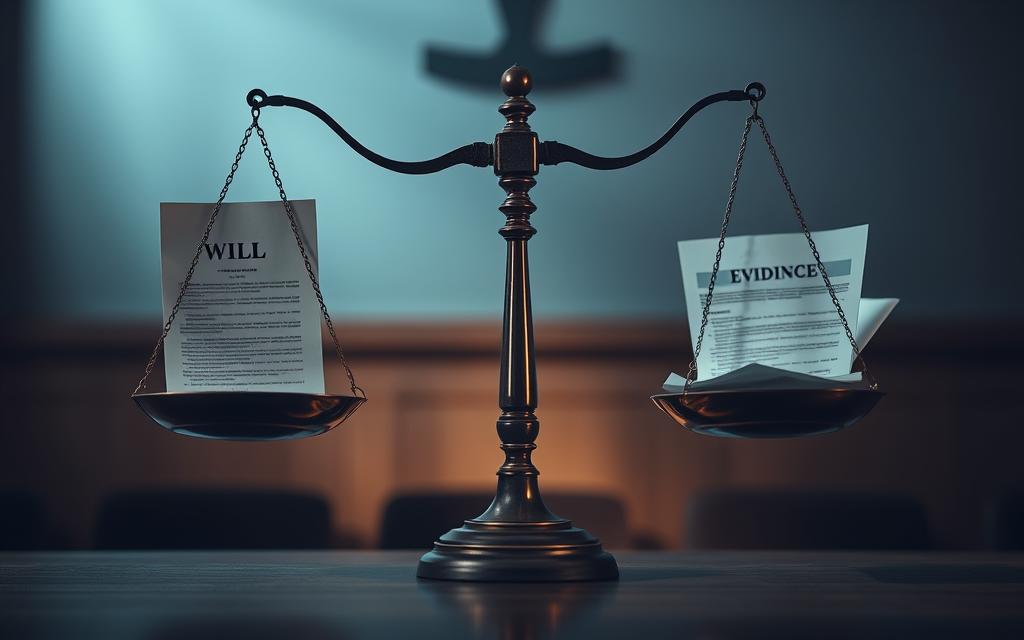
Challenging a will is not just about feeling something is off. It’s a serious legal battle that needs solid proof. People who want to contest a will must grasp the concept of burden of proof.
Who Carries the Legal Responsibility?
Usually, the person who wants to challenge a will has to prove their case. In Texas, only certain people can do this. These include:
- Surviving spouses
- Direct heirs
- Prior will beneficiaries
- Creditors with legitimate claims
Evidence Requirements for Challenging a Will
To win a will contest, you need strong evidence. Here’s a table showing common reasons and the evidence needed:
| Grounds for Contest | Percentage of Cases | Key Evidence Needed |
|---|---|---|
| Lack of Testamentary Capacity | 25% | Medical records, expert testimony |
| Undue Influence | 20% | Relationship dynamics, documented manipulation |
| Forgery or Fraud | 15% | Handwriting analysis, witness statements |
| Improper Execution | 10% | Procedural documentation, witness verification |
Being unhappy with what you got or hearing promises that didn’t happen are not enough. You must show clear problems with the will or the person who made it.
Legal fights over wills can cost from $5,000 to $50,000. This shows how important it is to have good evidence before starting a legal battle.
The Role of Witnesses in Will Contests
Witnesses are very important in will contests. They help show if a will is legal. Their stories can help figure out if a will is valid or not.
In cases where someone is trying to challenge a will, witnesses are key. They give important information. This can change the outcome of the case.
Importance of Witness Testimony
Witnesses are important in will contests. They can tell us a lot. Here are some things they can share:
- How well the person making the will was thinking at the time
- If someone else was pushing them too hard
- What happened when the will was signed
- What the person really wanted to happen with their stuff
Types of Witnesses
There are different kinds of witnesses in will contests. Each one can offer a special view:
| Witness Type | Role in Will Contest |
|---|---|
| Signing Witnesses | Make sure the will was signed correctly and the person was okay |
| Medical Professionals | Talk about the person’s mind and if they could make good choices |
| Personal Companions | Share about the person’s friends and family and if someone was too bossy |
| Financial Advisors | Give background on the person’s money choices |
Lawyers say that good and steady witness stories are very important. Each witness has something special to say. They can help prove if a will was made wrong or if someone was pushed too hard.
Court Hearings and Trials
Going through the probate court process needs careful planning. It also requires knowing about estate law. Will contests are complex and need a smart plan and expert help.

When you challenge a will, you must get ready for court hearings. These hearings can greatly affect the outcome of the estate dispute.
What to Expect in Court
Probate court hearings for contested wills have a set process. In New York, about 15% of will contest cases go to a full trial. This shows how important it is to know how courts work.
- Typical hearing duration ranges from 30 days to several months
- Evidence presentation is key to the case
- Witness testimonies are very important
- Legal arguments must be clear and well-supported
Presenting Your Case
To win a will contest, you need to prepare well in estate law. The person challenging the will must prove it’s not valid.
| Case Aspect | Key Considerations |
|---|---|
| Evidence Requirements | Documented proof of incapacity or undue influence |
| Witness Credibility | Strong, consistent testimony supporting claims |
| Legal Strategy | Clear arguments showing the will’s invalidity |
Challenging probate can cost a lot. In New York, the cost of probate litigation can be $10,000 to $50,000. This depends on how complex the case is.
About 60% of will contests are because of claims of undue influence. Only about two-thirds of these contests win. It’s very important to prepare well and have a good lawyer to help you through this tough legal process.
Potential Outcomes of a Will Contest
Dealing with inheritance disputes can be tough. This is true when contesting a will in court. The results can change family ties and how assets are shared.
When someone challenges a will, there are two main results. The court might decide the will is good or not. Knowing these outcomes is key for those in will disputes.
Upheld Will Scenario
If the court says the will is valid, things keep going as planned. This means:
- Assets will go to the people named in the will
- The person in charge of the estate can start settling things
- Those who challenged the will lose their case
Invalidated Will Scenario
If the court finds the will is not valid, other rules apply:
- An older, valid will might be used instead
- State laws might decide how assets are shared
- The estate could be divided differently
Experts say it’s important to think about why you’re challenging a will. It can cost a lot emotionally and financially. Inheritance disputes need strong evidence and legal help to win.
| Outcome | Asset Distribution | Legal Implications |
|---|---|---|
| Will Upheld | Original Will Terms | Challenge Rejected |
| Will Invalidated | Previous Will/Intestate Laws | Potential Redistribution |
Knowing these possible results helps people decide if they should challenge a will. It’s about understanding the risks and benefits.
Appeals in Will Contest Cases
Going through probate laws can be tough when you want to challenge a will. The appeals process is key for those who want to fight a probate court’s first choice on who gets what.
Getting the appeals process right is important. Not every court decision is the last word. There might be good reasons to question the first ruling.
Grounds for Appeal
- Legal errors in the original court proceedings
- Potential abuse of judicial discretion
- New evidence that was unavailable during the initial trial
- Procedural mistakes in probate court
Filing an Appeal: Key Steps
- Review the original court decision thoroughly
- Identify specific legal grounds for appeal
- Consult with an experienced probate attorney
- File necessary documentation within prescribed deadlines
The appeals process can change how an estate is split. People need to think hard about the risks and benefits before they start.
| Appeal Stage | Typical Duration | Potential Outcome |
|---|---|---|
| Initial Filing | 30-60 days | Petition Accepted/Rejected |
| Appellate Review | 6-12 months | Affirm or Reverse Lower Court Decision |
| Final Resolution | 12-24 months | Estate Distribution Determined |
Careful preparation and professional legal guidance are key to winning a will contest appeal. It’s important to be strategic. You need to know the ins and outs of probate laws and inheritance rights.
The Emotional Impact of Contesting a Will
Challenging a family inheritance is very hard. It’s not just about the law. It can make family tensions last for years or even forever.
Disputes over estates can make people feel very upset. Studies show that about 40% of these fights can make families split up for good. This shows how big the emotional hurt can be.
Navigating Family Dynamics
To deal with family issues in a will contest, you need to manage your feelings well. Here are some tips:
- Keep talking openly
- Try mediation with a pro
- Value your family more than money
- Be realistic about what you can get
Coping with Conflict
It’s hard to handle the feelings of fighting over a will. Here are some ways to cope:
- See a therapist who knows about family fights
- Join groups for people going through the same thing
- Take care of yourself and stay strong
- Look into other ways to solve disputes
| Emotional Impact | Potential Consequences |
|---|---|
| Family Relationship Strain | Long-term communication breakdown |
| Psychological Stress | Increased anxiety and possible depression |
| Financial Tension | Potential fights over money |
Knowing how will contests affect people can help you deal with them better. It’s about being kind and smart.
Tips for a Successful Will Contest
Contesting a will needs careful planning and understanding of legal steps. This guide helps those facing estate disputes.
Winning a will contest depends on key factors. You must have clear goals and all the right documents.
Best Practices for Contesting a Will
- Gather all important documents
- Keep detailed medical records
- Look for signs of undue influence
- Get help from probate lawyers
- Follow legal deadlines
Common Mistakes to Avoid
- Don’t miss important filing dates
- Don’t let emotions guide your strategy
- Collect enough evidence
- Know the legal rules well
Contesting probate needs smart planning. About 40% of cases win when there’s strong proof of undue influence or mental issues.
| Contest Strategy | Success Rate |
|---|---|
| Strong Evidence Presentation | 40% |
| Weak Evidence | 15% |
| Professional Legal Representation | 60% |
Experts say to prepare well, stay objective, and get professional help. Knowing the challenges can help you win.
Case Studies: Successful Will Contests
Looking at real cases of will contests helps us understand the legal fight for inheritance rights. These examples show how to deal with tricky will issues.
One case shows the tough parts of trust fights and inheritance disputes. It was a big legal fight between two sisters. The case made it clear how hard will contests can be.
Notable Examples of Will Contests
- An irrevocable trust dispute lasted 14 years
- There were claims of bad trust management
- There were questions about managing trust assets
The case had important points about will legality:
- Not giving yearly trust reports
- Using trust money for the wrong things
- Debates about fair pay for work done
Lessons Learned from Contested Wills
| Key Insights | Percentage |
|---|---|
| Estates Contested in NSW | 51% |
| Lack of Testamentary Capacity | 35-40% |
| Undue Influence | 25-30% |
| Court Case Settlements | 74% |
Challenging a will needs careful planning and a smart strategy. Successful challenges often show hidden issues in inheritance rights. Important lessons include:
- Keeping detailed records
- Knowing about trust duties
- Getting help from a good lawyer
These examples show that will contests are complex. They need a lot of evidence, a good lawyer, and a deep understanding of inheritance law.
Will contests are complex and can cost a lot of money. Costs can go up fast, often more than the inheritance. About 80% of will challenges fail, showing the need for strong evidence and a good legal plan.
Family feelings are big in estate disputes. Half of adult kids feel left out or not included in wills, causing big family fights. Lawyers often suggest mediation to save money, which can cut costs by up to 50%.
It’s important to know the costs of fighting a will. Legal fees can be over $15,000, based on how complex the case is. People thinking about this should think if the money is worth the cost. Getting advice from a lawyer can help understand the chances of winning and the costs.
Going through a will contest needs careful planning, strong feelings, and looking at money closely. Anyone thinking about this should gather all the evidence they can, get advice from a lawyer, and think about the possible outcomes.

